

Textile Jacquard Learning
Textile Jacquard Learning course
Textile Jacquard Learning course
Courses on Jacquard design typically bridge traditional weaving techniques with modern digital tools.
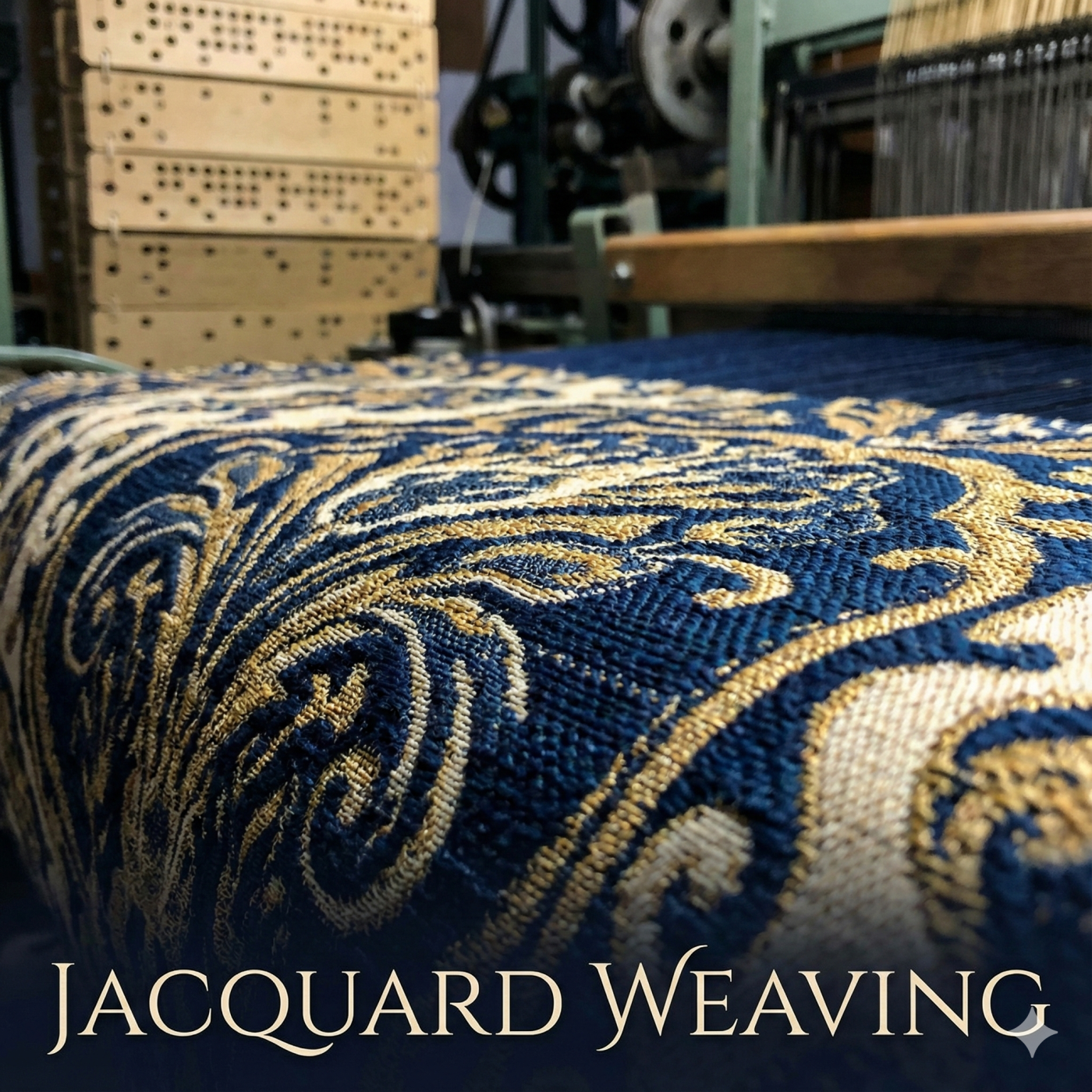
Jacquard Mechanism: Understanding the fundamental operation of the Jacquard loom, which enables individual control over warp threads to create complex designs.
Computer-Aided Design (CAD) Software: Training on industry-relevant software like NedGraphics (e.g., Texcelle, Weave Editor, Loom Editor) or other tools for digital textile pattern creation.
Pattern Programming: Learning how to translate a digital design into a loom file (like a .des file or .loom file) that the weaving machine can execute.
Motif Development: Creating and analyzing digital motifs and patterns for complex woven structures.
Fabric Analysis: Understanding how different yarn types, colors, and weaves affect the final fabric appearance and texture.
Color Theory: Application of color principles specifically for woven textile designs.
Weave Structures: Knowledge of various weave types (e.g., satin, twill, dobby) and how to incorporate them into Jacquard designs.
Applications: Understanding the use of Jacquard fabric in fields like fashion, home décor, and specialized textiles.
Graduates often pursue roles such as:
Jacquard Designer
Textile Quality Assurance Analyst
Loom Operator/Technician
Design Analyst
FAQ area empty
Need basic textile knowledge.
Software proficiency.
Artistic skills.
Jacquard Designer
Textile Quality Assurance Analyst
Loom Operator/Technician
Design Analyst
 Buy Now

Students
0
language
English
Duration
00h 00mLevel
advanced
Expiry period
Lifetime
Certificate
Yes Radha C
 English
 Certificate Course
 0 Students
 00h 00m
 1 Course
 0 Review